

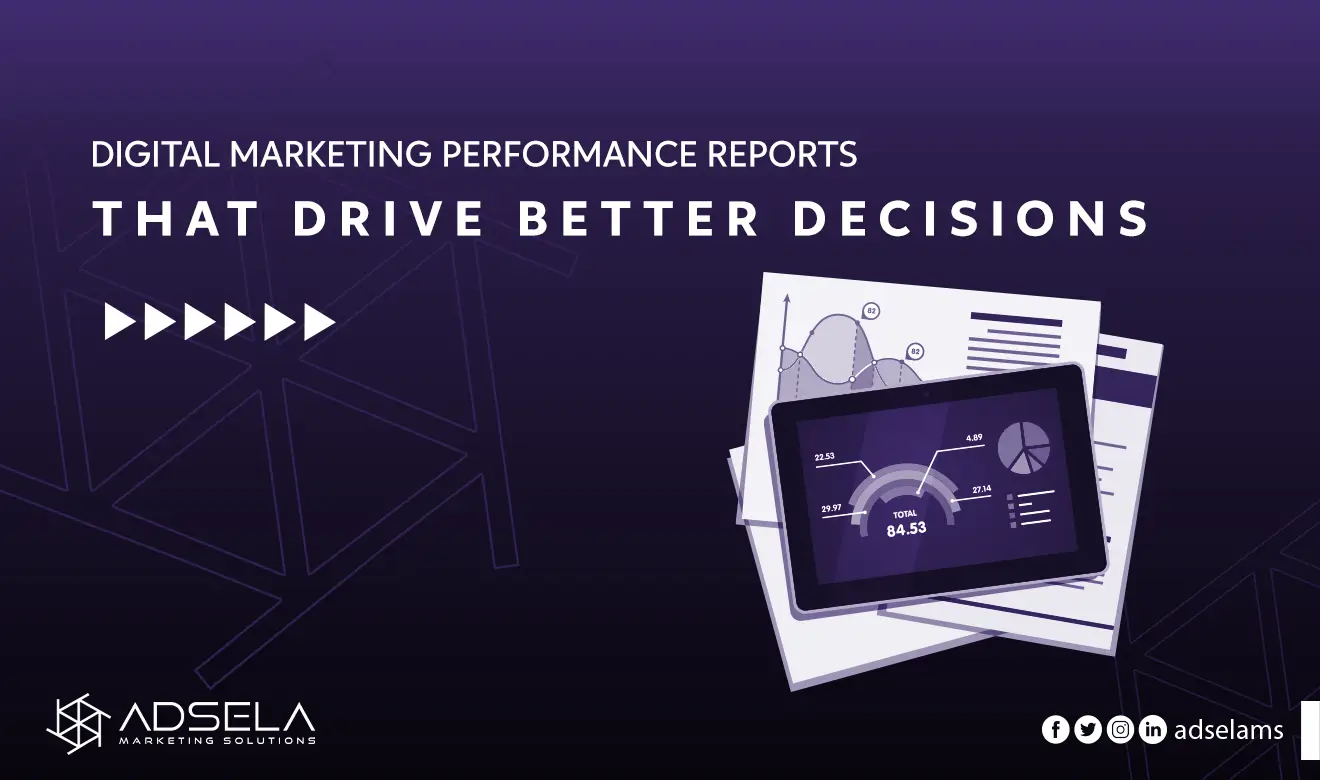
A digital marketing performance report provides a structured way for businesses to see how they’re doing in their online marketing efforts. Performance reports provide an opportunity for businesses to pull together important metrics from SEO, paid advertising, social, websites, and other platforms and gain insight into what each number means. A good report can’t just show clicks, impressions or visits to the website. It links marketing efforts to relevant metrics like leads, conversions, customer acquisition cost, revenue, and ROI. It enables marketing professionals and business leaders to determine which strategies are working well, spot performance problems, and make informed choices for upcoming marketing initiatives.
What Is a Digital Marketing Performance Report?
A digital marketing performance report is a structured overview of marketing data to assess a digital campaign or activity’s outcomes. It may contain SEO data, paid advertising data, social media data, email marketing data, website analytics data and CRM data.
The goal of the report is to illustrate what transpired over a defined window of time, and sufficient context to gain insight into campaign performance. Reports can be produced weekly, monthly, quarterly, or on a campaign basis depending on the business.
A good report will relate the performance metrics to predetermined performance objectives. For instance, a lead generation campaign can track qualified leads, conversion rate, and cost per lead, while an e-commerce campaign can track revenue, ROAS, and customer acquisition cost.
Why Does Every Business Need Regular Marketing Performance Reports?
Regular reporting helps businesses understand whether their marketing strategies are producing consistent results. Without regular reviews, performance problems can remain unnoticed, and opportunities for optimization may be missed.
A digital marketing performance report provides a reference point for comparing current results with previous periods. Businesses can determine whether website traffic is increasing, advertising costs are changing, conversions are improving, or specific campaigns are losing effectiveness.
Regular reports also improve communication between marketing teams and decision-makers. Instead of relying on general statements about campaign performance, stakeholders can review measurable results and discuss specific actions.
For agencies, consistent reporting is equally important because it allows clients to understand the progress of their campaigns and the value of ongoing marketing activities.
What Should Be Included in a Digital Marketing Performance Report?
The information that is included in a digital marketing performance report will vary based on the goals of the business and the marketing channels being evaluated. Most useful reports, however, combine some of the above performance measures, comparisons, insights, and recommendations.
| Report Element | Purpose |
| Website Traffic | Measures visitors and acquisition sources |
| Conversion Rate | Shows how effectively traffic generates desired actions |
| Leads | Tracks generated prospects |
| Cost Per Lead | Measures lead acquisition efficiency |
| Customer Acquisition Cost | Evaluates customer acquisition costs |
| ROAS | Measures advertising return |
| Revenue | Connects marketing activity with financial outcomes |
| SEO Performance | Tracks organic visibility and conversions |
| Social Media Performance | Measures reach, engagement, and conversions |
| Campaign Performance | Compares individual campaigns |
| Recommendations | Identifies opportunities for optimization |
Do not simply include information in the reports where it is available, but not relevant to the particular question. The best reporting is done on KPIs that facilitate business decisions.
How Do Performance Reports Measure Campaign Success?
A digital marketing performance report is a document that tracks the performance of your campaigns relative to your established goals and/or the performance of your competitors.
For instance, if you’re looking to produce 100 qualified leads for a particular acquisition cost, the report will display the number of leads generated and the cost of acquisition. This provides decision makers with a better idea of whether the campaign actually accomplished its goal.
In addition, it is possible to compare campaign performance over time. A business could measure how many conversions they have this month, but also look at the month before, or decide to look at how many conversions they have this month versus a previous month.
The most valuable reports are those that tell you if a KPI has moved up or down. They add context and also uncover feasible explanations for big variations, which assist marketers determine their subsequent activity.
How Can Automated Reports Improve Marketing Efficiency?
Automated reporting can save marketing teams a lot of time on data collection and data organization. Automated systems can extract data from the integrated systems and produce reports on a regular basis, eliminating the need to log onto several systems and manually copy and paste numbers into a spreadsheet.
This simplifies the reporting process and ensures that there is no manual data entry mistakes.
Automation can be especially useful for multi-client agencies. Reports can be generated weekly or monthly without the account managers having to go through the same reporting process each account.
Marketers also have some more time to analyze and optimize, thanks to automation. With the automation of a digital marketing performance report, teams can focus more on interpreting performance trends and creating strategies to boost performance, instead of hours of manual preparation.
How Do Interactive Dashboards Simplify Performance Reporting?
Interactive dashboards give users more freedom to explore marketing data rather than just look at static reports. They can present KPIs in charts, graphs, tables, and filter that can make the performance information understandable.
For instance, a dashboard can enable a marketing manager to compare various campaigns, ad locations, channels, and time periods. This will allow you to see trends and analyse performance changes more easily.
Dashboards are especially beneficial for companies operating on several marketing channels. Users can access the relevant information from a single interface, rather than having to access multiple platforms.
But dashboards should be succinct. Too many metrics on a dashboard can make identifying important information more challenging. The ideal dashboards emphasize the key performance indicators, and supply adequate context for users to make decisions.
What Should You Consider When Choosing a Marketing Reporting Solution?
Businesses must take into account the reporting channels, business goals, team size and reporting needs to choose a reporting solution.
Important factors include:
- Enhance the integration with advertising platforms.Improve integration with advertising platforms.
- Integrations with SEO and website analytics.
- CRM connectivity
- Customizable dashboards
- Automated report generation
- KPI tracking
- Historical comparisons
- Data visualization
- Client reporting capabilities
- Ease of use
- Scalability
- Data accuracy
Simplify Your Marketing Performance Reporting
If your team needs a more centralized way to collect marketing data, monitor KPIs, and create professional reports, a dedicated reporting platform can reduce manual work and improve visibility.
Explore AgencyAnalytics and discover tools designed to help marketing agencies streamline reporting and performance monitoring.
Why Choose Adsela for Digital Marketing Performance Reporting?
The actual value of a report is when the information contained within it can lead to improved decision making. Adsela’s performance reporting philosophy is strategy and optimization-driven, connecting data to strategy.
Performance statistics help businesses see how well their marketing efforts, such as SEO and paid ads, social media marketing activities, website, and conversions, are working to accomplish a company’s marketing goals.
Adsela can support businesses to detect trends in performance, identify underperforming elements, and design strategies on measurable results. This is a step from reporting incidents to identifying areas for improvement for the future.
A good digital marketing performance report will also help to lead to a more fruitful discussion of the budget. With all of the costs, conversions, revenue and other relevant KPIs visible for the businesses, they can make better decisions on where to spend their marketing budget.
Ready to Turn Marketing Reports Into Better Decisions?
Contact Adsela to build a data-driven reporting strategy that turns your marketing performance data into actionable insights and measurable growth.