

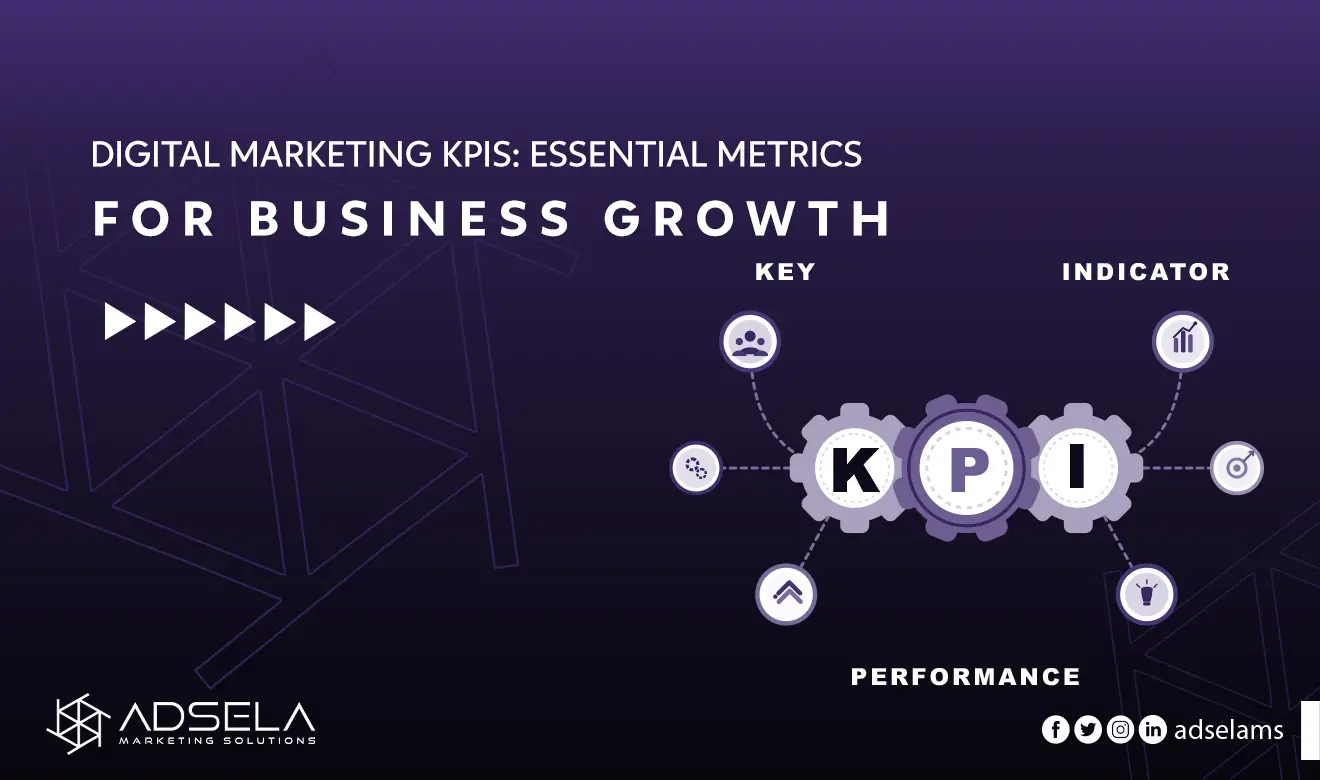
Digital marketing KPIs are used to track the effectiveness of digital marketing campaigns in a business. Whether it’s through search results, paid ads, social media or website conversion, KPIs offer quantifiable proof of success and opportunities for improvement.
If there are no clear KPIs outlined, marketing teams can get bogged down in vanity metrics like impressions or follower numbers without knowing how it affects their business. The correct digital KPIs are linked to initiatives and actions that can help you achieve goals like leads, sales, customer acquisition and ROI.
What Are Digital Marketing KPIs and Why Do They Matter?
Digital marketing KPIs are quantifiable measures that assess digital marketing efforts against the business goals. They can help marketers gauge if campaigns are going in the right direction and serve as a foundation for optimization.
Let’s say the company that specializes in lead generation keeps track of conversion rate, cost per lead, qualified leads, and customer acquisition cost. An e-commerce business might focus on conversions, the average order value, ROAS, and its revenue.
The importance of KPIs is that marketing performance can’t be assessed without measurable objectives. When businesses track the appropriate digital marketing KPIs, they can determine which strategies are effective, identify issues with their performances, and make better decisions on their marketing investments.
Which Digital Marketing KPIs Should Every Business Track?
The most effective digital marketing KPIs will vary according to the marketing objectives, marketing channels, and industry of the business. But there are a few that are applicable to most businesses.
| KPI | What It Measures |
| Conversion Rate | Percentage of visitors who complete a desired action |
| Cost Per Lead | Average cost of generating a lead |
| Customer Acquisition Cost | Cost of acquiring a new customer |
| Return on Ad Spend | Revenue generated from advertising investment |
| Website Traffic | Number of users visiting the website |
| Click-Through Rate | Percentage of users who click an ad or link |
| Engagement Rate | Audience interaction with digital content |
| Lead-to-Customer Rate | Percentage of leads that become customers |
| Customer Lifetime Value | Expected revenue from a customer over time |
| Revenue | Financial results generated from marketing activity |
Not all numbers are available and business doesn’t have to keep track of all of them. Rather, they should choose digital marketing KPIs that are aligned with their goals and provide insights to decision makers about marketing performance.
How Do You Choose the Right KPIs for Your Marketing Goals?
The first step in selecting the appropriate digital marketing KPIs is to establish the goals for the digital marketing strategy. KPIs should directly relate to a business objective.
Marketers can target reach, impressions, video views, branded search and engagement if the goal is brand awareness. In the case of lead generation, cost per lead, conversion rate, qualified leads, and lead-to-customer rate can be more relevant.
Revenue, ROAS (return on ad spend), cost per customer acquired, and customer lifetime value may be better metrics for sales-driven campaigns.
One good strategy is to question:
- Which of the following is the main marketing objective?
- What is a successful customer action?
- What is a measurement to determine that action?
- Is this metric something that the marketing team can have an impact on?
- Is there insightful information within the KPI?
This would avoid teams picking KPIs because they can be readily obtained.
Which KPIs Measure SEO, Paid Ads, and Social Media Performance?
Different marketing channels require different digital marketing KPIs because each channel serves a different purpose.
For SEO, marketers can monitor organic traffic, keyword rankings, organic conversion rate, impressions, click-through rate, and conversions from organic search.
For paid advertising, important indicators can include impressions, CTR, CPC, conversion rate, cost per conversion, ROAS, and total revenue generated from campaigns.
Social media performance can be evaluated using engagement rate, reach, impressions, follower growth, video views, link clicks, and conversions attributed to social channels.
The most effective approach is to connect channel-specific KPIs with broader business outcomes. High engagement or traffic is useful, but it becomes more valuable when it contributes to leads, sales, or other measurable objectives.
How Can Real-Time KPI Dashboards Improve Marketing Decisions?
Real-time KPI dashboards provide marketing teams with a unified look at real-time performance. Marketers don’t have to wait until the next report to see for any major changes and to explore any possible issues before they get more serious.
For instance, if the Cost per Click rises dramatically, it could be due to any of these reasons: change in competition, change in audience behavior, change in campaign settings. If you are seeing a spike in conversions on your website, it may be because of a successful campaign or landing page, and you should pay it more attention.
Real-time dashboards can also provide easy team communication. The same performance information can be accessed by marketing managers, and compared to performance over the past periods to help them prioritize activities for optimization based on quantifiable information.
But real-time monitoring shouldn’t result in a response to minor changes. It is important to understand digital marketing KPIs in context; looking back at past data and goals to decide whether a change is significant or not.
What Are the Most Common KPI Tracking Mistakes Marketers Make?
When businesses track too many KPIs or are tracking the wrong numbers, this can result in ineffective KPI tracking.
Common mistakes include:
- Measuring too many metrics at once
- Focusing on vanity metrics
- Ignoring conversion and revenue data
- Applying different measuring tools for the same dimension.Different measurement units for the same dimension.
- Without having clear KPI targets fails to motivate the team to work harder.
- Looking at statistics but not acting on them.
- Comparing campaigns with different campaign goals
- The inability to access up-to-date information.
- Not addressing data quality and data attribution problems
A very typical error is to manage all channels in the same way. A metric that is important to SEO might not be the same for social media or paid ads.
Setting up digital marketing KPI tracking is only possible if you choose metrics that are related to the business and tie them to its results.
How Do Marketing KPIs Help Increase ROI and Reduce Ad Spend?
Well-defined digital marketing KPIs can help businesses improve ROI by showing where marketing investment generates the strongest results. When marketers understand the relationship between spending, conversions, and revenue, they can make better budget allocation decisions.
For example, if one paid advertising campaign produces customers at a significantly lower acquisition cost than another, the business can investigate why and potentially shift more budget toward the better-performing strategy.
KPI analysis can also reveal campaigns that consume budget without generating sufficient results. These campaigns can be optimized, adjusted, or paused depending on the underlying data.
The goal is not simply to reduce advertising spend. The objective is to spend more efficiently by investing in campaigns and channels that contribute to profitable growth.
What Should You Look for in a Digital Marketing KPI Reporting Platform?
A strong KPI reporting platform should make performance data easier to collect, analyze, and communicate. Businesses and agencies should look for tools that support multiple marketing channels and provide flexible reporting options.
Important features include:
- Automated data collection
- Customizable dashboards
- Multi-channel integrations
- KPI visualization
- Automated reporting
- Historical performance comparisons
- Client reporting capabilities
- Data source integrations
- User-friendly dashboards
- Scheduled reports
For agencies managing multiple clients, centralized reporting can significantly reduce the time spent manually collecting information from different platforms.
If you want to simplify how your agency collects and presents marketing performance data, AgencyAnalytics provides reporting and dashboard capabilities designed for marketing agencies.
Simplify Your Marketing KPI Reporting With AgencyAnalytics
Bring your marketing data into a more centralized reporting workflow and make it easier to monitor digital marketing KPIs across your campaigns.
Why Choose Adsela MS to Track and Optimize Your Digital Marketing KPIs?
Tracking digital marketing KPIs is only the first step. Businesses also need a strategy for interpreting performance data and turning insights into practical optimization decisions.
Adsela MS can help businesses connect marketing performance with broader business objectives. By analyzing SEO, paid advertising, social media, website performance, and conversion data, the team can identify opportunities and areas that require improvement.
A structured KPI approach allows businesses to understand not only what happened but also where marketing strategies can be adjusted. This can support more effective campaigns, better budget allocation, and stronger long-term performance.
The most valuable KPI strategy is one that combines accurate measurement with continuous optimization. With the right process, businesses can use digital marketing KPIs to make more confident decisions and focus their resources on activities that contribute to measurable growth.
Ready to Improve Your Digital Marketing Performance?
Contact Adsela MS to track, analyze, and optimize your digital marketing KPIs with a strategy focused on measurable business results.