

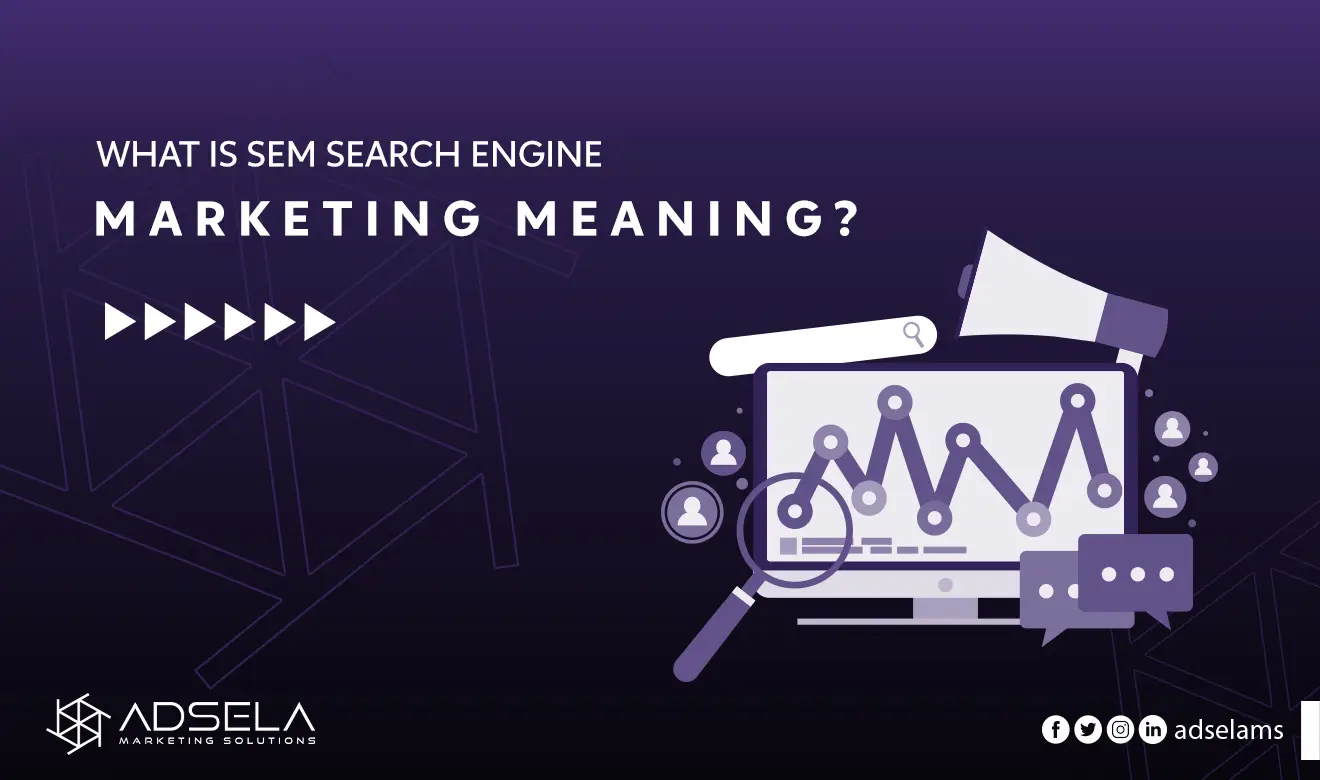
If you’ve come across the term SEM and wondered exactly what it covers, you’re not alone. Sem-search-engine-marketing-meaning is crucial for any company that wants to be found by customers who are actively searching the internet; it can have a profound impact on how fast and reliably a business can acquire traffic. This guide will explain the meaning of SEM, how it functions and the difference between SEM and SEO.
What Is Search Engine Marketing (SEM)?
In essence, sem-search-engine-marketing-meaning is about paid methods to boost a site’s position on search engine outcomes pages, particularly by means of PPC (pay per click) advertising. In contrast to organic strategies, SEM provides instant visibility on the top search result pages in return for bidding for keywords that are relevant to their business.
How Does SEM Work?
SEM works on an auction basis, with advertisers bidding for keywords that are relevant to their company. To really comprehend what sem-search-engine-marketing-meaning is, one must know that ad placement relies on the amount paid and the Quality Score (a measure evaluating the relevance and likely performance of the ads) and not only on the amount that a business wishes to pay.
What Is the Difference Between SEO and SEM?
While both SEO and SEM are focused on boosting a site’s ranking in SERPs, they do so in different ways. Before you know what is the SEM meaning, you need to understand the different ways of generating the traffic. One of the methods is paid advertising and the other is organic optimization that will help you achieve rankings in the long-term. While SEO is more about establishing long-term authority and sustainable organic growth, SEM can deliver immediate traffic and leads for businesses. Indeed, many of the best marketing strategies utilize a combination of both, to maximize visibility and ROI.
| Feature | SEO | SEM |
| Traffic Source | Organic search results | Paid search advertisements |
| Cost Model | No cost per click | Pay-per-click (PPC) or other paid bidding models |
| Time to See Results | Typically 3–6 months | Within hours or days |
| Long-Term Value | High, with lasting organic visibility | Depends on ongoing ad spend |
| Best For | Sustainable traffic growth | Immediate traffic and lead generation |
| Click Cost | No charge for individual clicks | Charged for each ad click |
| Ranking Factors | Content quality, technical SEO, backlinks, and user experience | Bid amount, ad quality, relevance, and landing page experience |
| Budget Requirement | Lower ongoing media costs but requires continuous optimization | Requires a dedicated advertising budget |
| Performance Tracking | Organic traffic, keyword rankings, conversions | Clicks, impressions, CPC, CTR, conversions, and ROAS |
| Ideal Strategy | Long-term brand authority | Short-term growth and rapid customer acquisition |
Why Is SEM Important for Business Growth?
Businesses can’t afford to miss out on the opportunities to connect with potential customers at the precise moment they are actively looking for a product or service online without understanding the meaning behind sem-search-engine-marketing.
SEM is different from traditional marketing in many ways, such as delivering instant visibility, precise targeting and measurable results. From lead generation to driving online sales and creating brand awareness, SEM can be customized to meet any business objective, offering flexibility in scale that aligns with performance and budget.
- Some of the major advantages of SEM for businesses are:
- Go straight to the user who’s actively looking for your products or services with high intent customers.
- Campaigns can produce results within hours of launch, and you can get traffic and conversions in a few hours.
- Use keywords, location, device, demographics and audience signals to target the right audience.
- Manage advertising spend by placing limits on daily or monthly spending, adjusting bids accordingly.
- Track and evaluate performance with metrics like click-throughs, conversions, cost per click (CPC), and return on ad spend (ROAS).
- Boost brand presence by getting to the top of search engine results, even when competing with other brands.
- Continuously optimize campaigns based on real-time data, A/B testing, and automated bidding strategies for better ROI over time.
Which Platforms Support Search Engine Marketing?
In most markets, Google Ads is the most popular platform for meaningful reach as well as for sem-search-engine-marketing-meaning, though Microsoft Advertising (Bing Ads) allows for meaningful reach, especially for some B2B and older demographic audiences. Both platforms have bidding systems for placing search ads based on auction bidding.
How Do You Build a High-Converting SEM Campaign?
The first step in a high-converting strategy for sem-search-engine-marketing-meaning is keyword research, as well as highly targeted advertising groups and landing pages. Testing ad copy and bidding strategies continuously, and utilizing negative keywords to filter out irrelevant traffic, ensures campaigns are efficient and cost-effective over time.
What Metrics Measure SEM Success?
The key metrics for measuring SEM in practice are click-through rate, conversion rate, cost per click and return on ad spend. Click-throughs and impressions are not the end of the story; they will only give you an idea of whether a campaign is profitable or not if you can track actual conversions.
Track Your SEM Performance in Real Time with AgencyAnalytics
To run effective SEM campaigns, you need to be able to know how they’re going at all times. Easily view clicks, conversions, and ROI from your Google Ads and Bing Ads in one place without switching apps.
Want a clearer view of your SEM performance? Try AgencyAnalytics free and start tracking your campaigns in one place.
Common SEM Mistakes That Waste Your Budget
While some businesses may have an understanding of what sem-search-engine-marketing-meaning is in theory, they often fail to apply these concepts in practice, such as by focusing on a too-general keyword, neglecting to use negative keywords, or directing traffic to a generic landing page rather than a specific, conversion-oriented landing page. Not measuring conversions well is likely the most expensive error conversions are the lifeblood of optimization, and without accurate data, budget decisions are made on a whimsical basis.
How AI Is Transforming Search Engine Marketing
Today, AI is increasingly influencing the world of modern SEM, including automated bidding, predictive audiences targeting, and dynamic ad creation. These tools give campaigns the ability to dynamically adjust in real time to performance data, and will frequently beat manual bid management, particularly for accounts that have high numbers of keywords.
Why Partner with Adselams for SEM Services?
Adselams’ hands-on experience with sem-search-engine-marketing-meaning empowers businesses throughout Saudi Arabia to convert ad investments into tangible leads. Adselams is a Google Premier Partner that can create and fine-tune SEM campaigns to address actual business objectives supported by clear reporting and constant testing of performance and not a “set-it-and-forget-it” strategy.
Call Adselams today to chat with them about your e-commerce objectives, and create a marketing plan that will help you drive more traffic, conversions, and lasting earnings.